01
Reduce preventable fire risk
Remove accumulated grease from accessible parts of the exhaust path—not just the surfaces everyone can see.
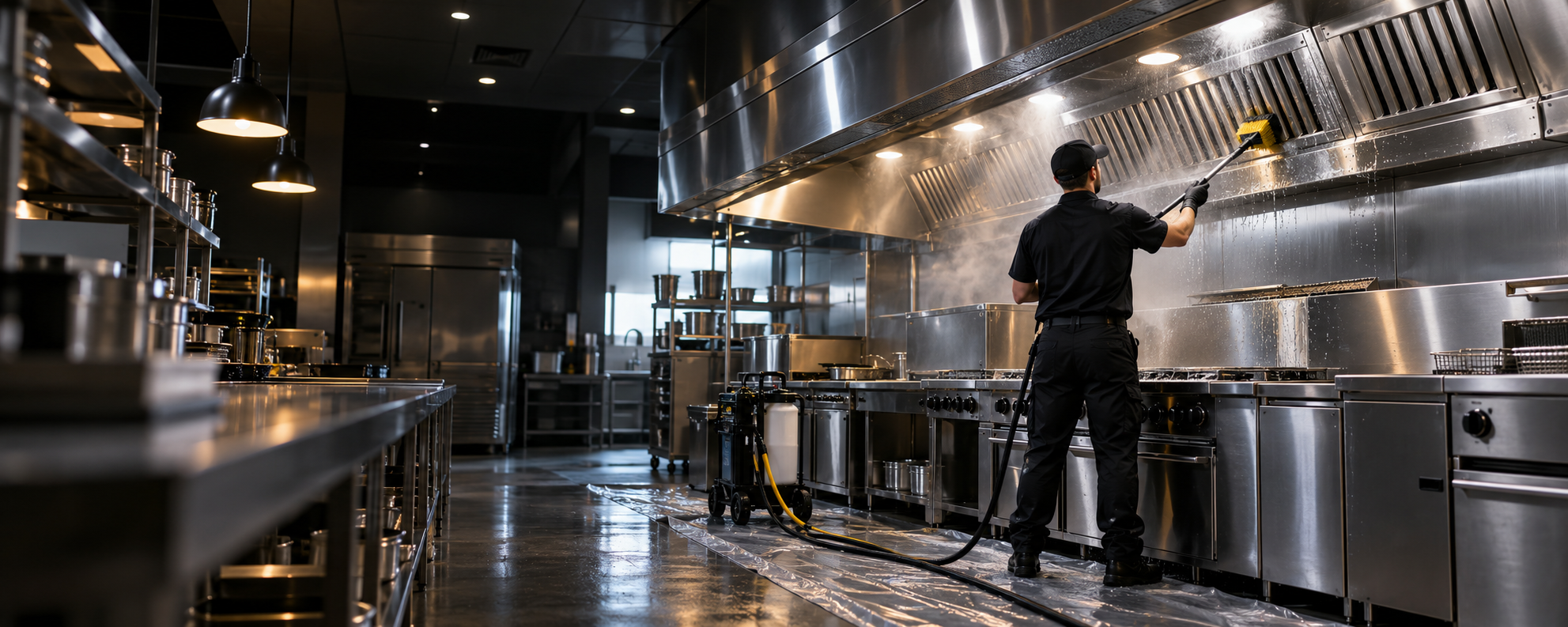
Hood-to-rooftop exhaust care
Professional hood, duct, fan, and rooftop exhaust cleaning for restaurants and commercial kitchens. Request a quote and schedule service around your operating hours.
Restaurants
Hotels
Schools
Food halls
Commissaries
Catering kitchens
Cleaning intervals matter
Commercial exhaust systems need recurring professional cleaning based on cooking volume, system conditions, and applicable fire-code requirements.
Many commercial kitchens require exhaust-system cleaning at least quarterly, with more frequent service for high-volume or solid-fuel cooking.
This is general information, not legal or fire-code advice. Cleaning alone does not guarantee inspection approval or code compliance.Complete service scope
A professional scope treats the exhaust system as a connected whole, then records what was serviced for your files.
Hood canopy and plenum
Grease filters
Accessible ductwork
Exhaust fan
Rooftop work area
Degreasing and cleanup
Before-and-after photographs
Service documentation
Operational value
Remove accumulated grease from accessible parts of the exhaust path—not just the surfaces everyone can see.
Keep dated documentation and photographs together so your team can quickly find the last service record.
Plan service after close or during another agreed low-impact window to reduce disruption to the kitchen.
Set the next cleaning interval from kitchen volume, cooking method, and observed system conditions.
Built-in accountability
Instead of relying on memory, your team receives a concise record of what was serviced, what the system looked like, and when it may need attention again.
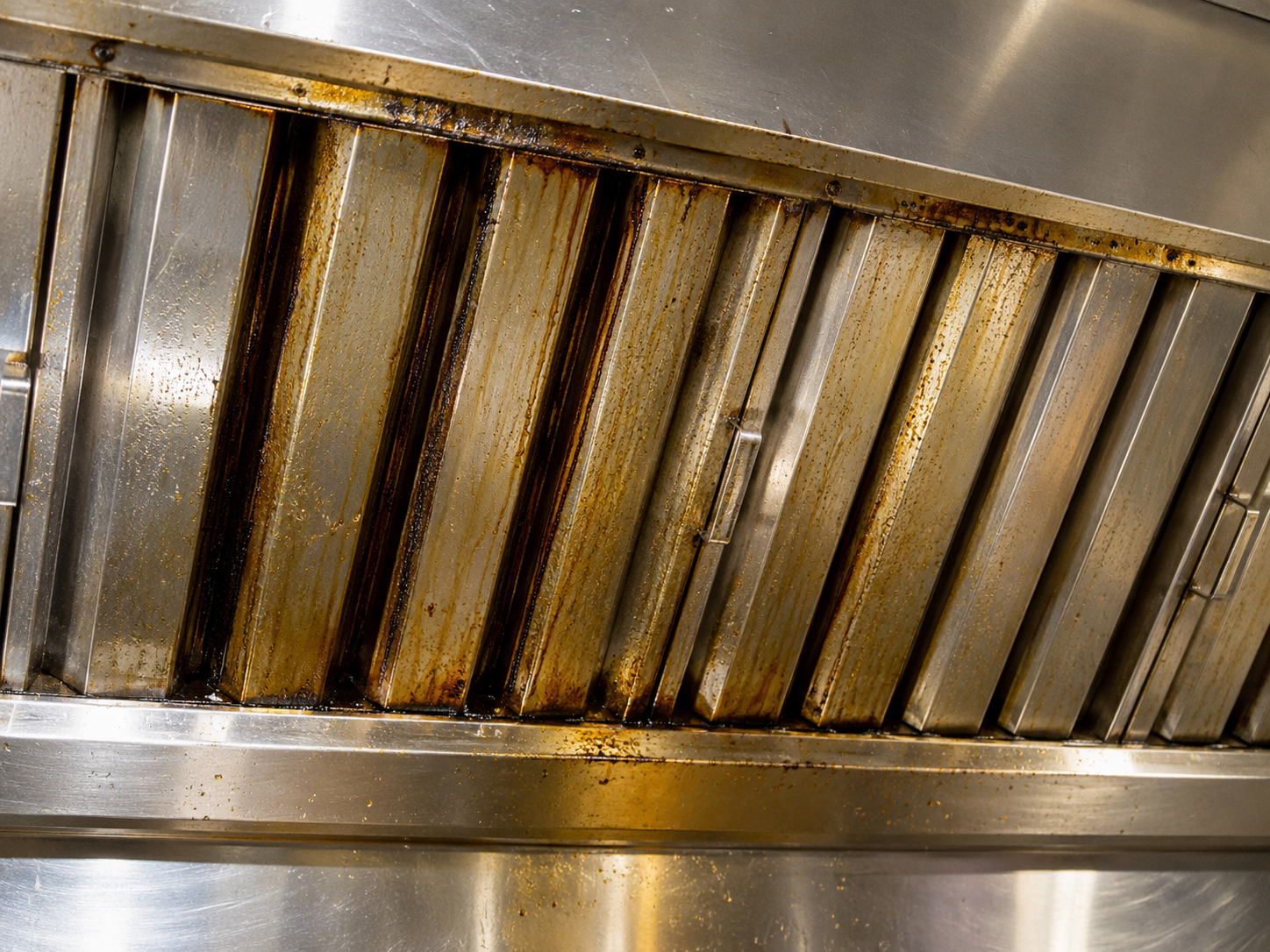
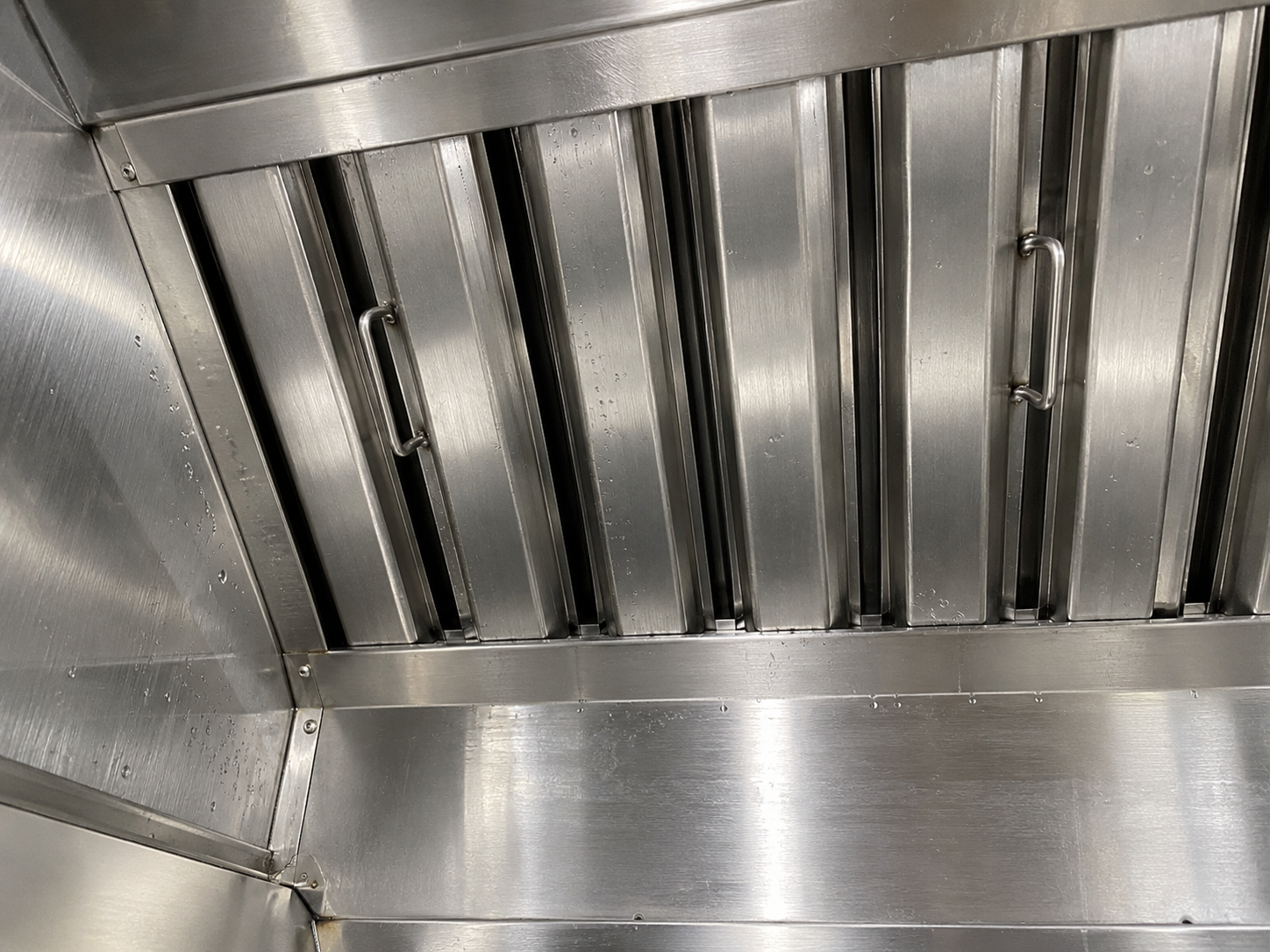
Illustrative comparison
These original demonstration images illustrate how a service record can make the change visible. They do not depict a real ProofHood project.
Visible grease accumulation at filter bank and housing.
Degreased stainless steel, photographed after completion.
How it works
Send your kitchen type, hood size, cooking method, location, and preferred timing.
Receive a clear scope and scheduling confirmation for the agreed service window.
The connected exhaust system is serviced with the kitchen protected and work area contained.
Get photo documentation plus an observed condition and recommended next-service date.
Recurring service plans
Recurring scheduling helps multi-location operators and busy kitchens avoid missed cleaning intervals, last-minute calls, and incomplete records. Plans can be quarterly or based on your kitchen’s actual needs.
Practical answers
Every exhaust system is different. These answers help you prepare the information needed for a clearer scope.
Still have a question? Call (212) 555-0148Request a cleaning quote
Share the basics below. In a live site, these details would help the service provider confirm scope, access, and scheduling.
Portfolio demonstrationThis form does not send information to a real company.
Clean. Record. Reschedule.